4 min. read · By Luc · 20 January 2026

Editorial by Luc Mangin
The world of philately, a field long governed by centuries-old traditions, is undergoing a bold transformation thanks to the emergence of crypto-stamps. These "phygital" collectibles, blending physical objects with their digital counterparts on the blockchain, are redefining the notion of rarity in unprecedented ways. Far from being limited to simple scarcity dictated by limited print runs, rarity in the crypto-stamp universe now embodies verifiable authenticity, transparent distribution, and a captivating fusion between traditional collecting and cutting-edge technology.
This pioneering work, led by Austria, Thailand, and Gibraltar, has paved the way for a broader movement across Europe and beyond. Today, this phenomenon extends globally with postal operators such as Hrvatska pošta (Croatian Post), Liechtenstein Post, Japan Post, and CTT Correios de Portugal and many more applying the same concept of rarity to their crypto-stamp programs. In the United States, the USPS (United States Postal Service) has also joined the movement in collaboration with the VeVe platform, offering an exclusively digital approach with NFTs without physical components, illustrating the diversity of emerging models in this rapidly expanding universe. Additionally, Stampsdaq has launched its own NFT platform integrating rarity systems for five postal operators, further demonstrating the scalability and global appeal of this innovation.

Austria was one of the first countries to emerge on the crypto-stamp scene with its famous "Austrian Unicorn." The concept of rarity is illustrated here through five different unicorn colors, each associated with a distinct rarity level on the blockchain. Each color is issued in limited quantities, ranging from most common to unique, creating a hierarchy of value and exclusivity that is immediately recognizable and verifiable by collectors. This playful and visual approach has captured the imagination and demonstrated how rarity can be creatively integrated.

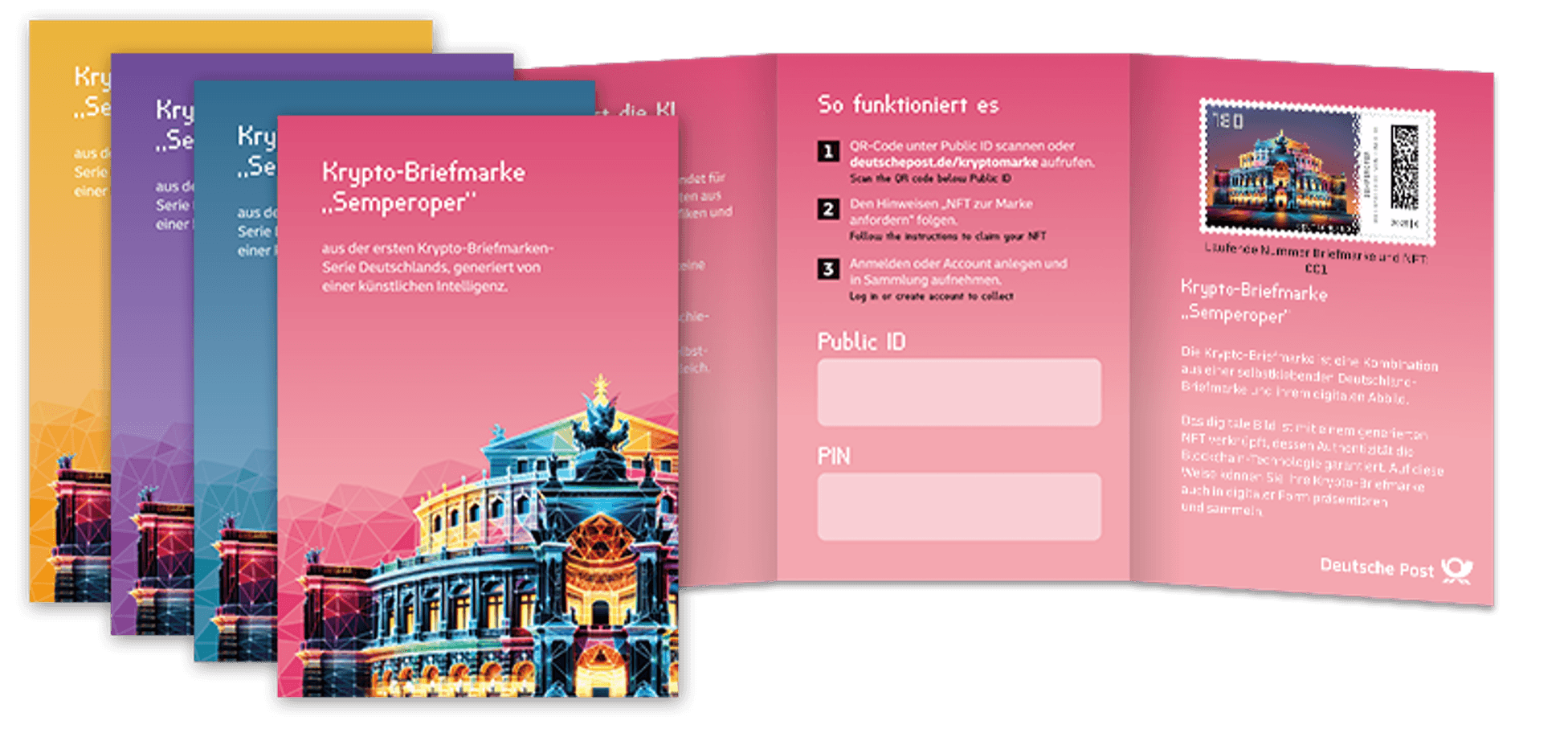
Deutsche Post, the German postal service, has also entered the crypto-stamp market with an approach characterized by precision and rigor. Their editions have focused on a series of national monuments, celebrating Germany's architectural heritage through the blockchain. Their issues often emphasize specific technical features and accurately numbered series, where each number holds particular significance. Rarity is defined by color variations, often with subtle yet significant variations that add to collectible value. The digital engineering behind these stamps ensures complete transparency of issuance and ownership.

France, through La Poste, has also embraced this innovation by launching its own NFTimbre. The French approach is distinguished by showcasing cultural or historical themes, often in very limited editions, increasing their desirability. For example, special series may celebrate significant national events or iconic figures. With each issuance of blocks in limited quantities, a specific NFT is created, adding an additional layer of digital uniqueness to the physical collectible. Rarity is reinforced here by unique designs and extremely restricted print runs, transforming each stamp into a precious piece of digital and physical history. The traceability offered by blockchain guarantees the authenticity of these special editions, a major asset for demanding collectors.

For platforms like ciphers.me, which serve as meeting points for enthusiasts who buy, claim, collect, and trade these "phygital" collectibles, understanding these reinvented notions of rarity is essential. Whether it's color-based rarity (multi-tiered visual color system), cultural rarity (thematic editions with strong historical value), technical rarity (precisely numbered series with engineering precision), evolutionary rarity (emerging programs with new mechanics), or purely digital rarity (NFTs without physical components), these approaches teach us that rarity in the crypto universe transcends simple scarcity. It's about verifiable authenticity, transparent distribution, and an exciting fusion between traditional collecting and cutting-edge technology. As we continue to explore blockchain capabilities, the concept of rarity will undoubtedly continue to evolve, offering increasingly complex layers of uniqueness to collectors worldwide.